
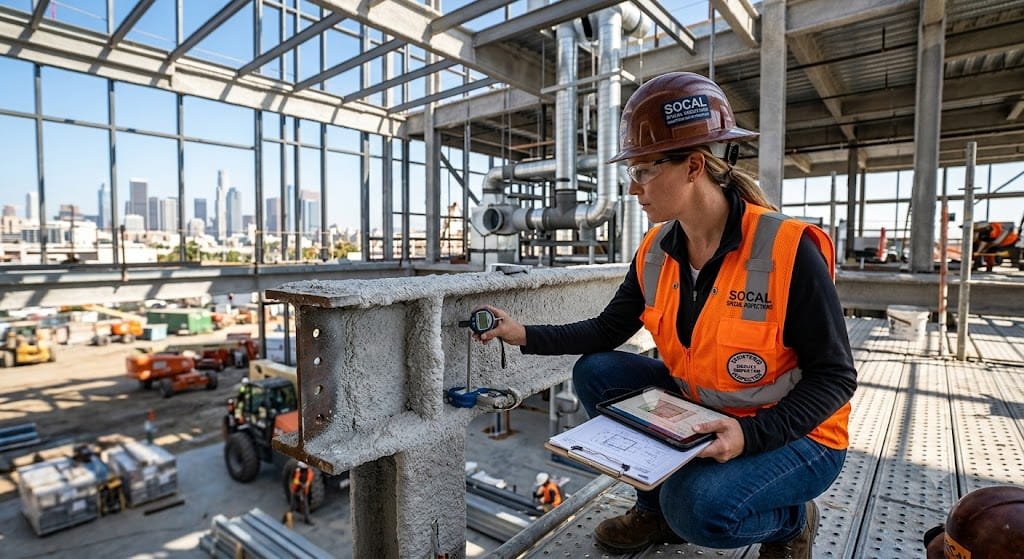
Spray Fireproofing Inspection
Certified ICC Spray-Applied Fireproofing deputy inspectors delivering rapid-response thickness verification and bond strength testing to secure building code compliance and keep jobsites moving forward.
Estimated Investment
$350 - $1,799
Our registered deputy inspectors provide certified, code-compliant spray-applied fireproofing inspection and thickness testing services across Southern California. All quality control evaluations are performed in strict accordance with the International Building Code (IBC Chapter 17), AWCI Technical Manual 12-A, and ASTM standards.
Comprehensive Fireproofing Inspection Protocols:
-
Substrate Condition Verification: On-site inspection of structural steel surfaces prior to application to ensure they are free of oil, loose scale, heavy rust, or any debris that could inhibit adhesion.
-
Thickness and Density Testing: Standardized measurement of applied fireproofing material thickness using electronic gauges or probe testing, along with field density verification per ASTM E605.
-
Adhesion and Cohesion Testing: Execution of bond strength testing in accordance with ASTM E736 to verify the material adheres properly to structural steel under design loads.
-
Patching and Structural Framing Reviews: Detailed inspection of framing structural elements after MEP installation to ensure any displaced or damaged fireproofing material is completely repaired and patched.
Frequently Asked Questions
What parameters determine the pricing of a spray-applied fireproofing special inspection?
Fireproofing inspection costs are primarily based on whether your project requires continuous monitoring during application or periodic testing after the material cures, alongside the total square footage requiring ASTM thickness and bond-strength tests.
Why is bond strength testing required for spray-applied fireproofing?
Building codes mandate ASTM bond strength testing to ensure the fireproofing material can withstand building movement, vibrations, and air blasts without delaminating from the structural steel, ensuring it will stay intact during a thermal event.
What happens if the fireproofing fails a thickness or density test?
If a section falls short of the required fire-resistive rating thickness, our inspectors will immediately mark the deficient zones so your applicator crew can spray a correction patch before scheduling a rapid re-inspection.
Ready to Get Started?
Connect directly with our friendly local team to ask questions and schedule a convenient visit.